PIANO TILES










SIMILAR GAMES
























Description


Piano Tiles - Github.io Games
About Piano Tiles - Github.io Games
We deliver a comprehensive overview of Piano Tiles hosted on the Github.io platform, showcasing its design philosophy, technical architecture, and community-driven development approach. The game emerges as a minimalist rhythm challenge where players tap on descending tiles to produce melodic sequences, echoing the sensation of playing a piano keyboard. Our analysis highlights the seamless integration of JavaScript, HTML5 Canvas, and CSS3 within the Github.io ecosystem, enabling rapid deployment and effortless sharing across browsers.
The repository underlying Piano Tiles follows a clean folder structure that separates assets, scripts, and styling, fostering maintainability and scalability. By leveraging modern tooling such as Webpack for module bundling and ESLint for code consistency, developers can extend functionality while preserving the original user experience. This article details our methodology, ensuring that every component aligns with best practices for performance and accessibility.
Core Gameplay Elements
We examine the core mechanics that define the Piano Tiles experience on Github.io:
- Tile Generation: Tiles spawn from the top of the viewport and fall at variable speeds, creating dynamic difficulty scaling.
- Tap Detection: Precise event listeners capture each click or tap, registering successful hits through visual feedback and sound cues.
- Scoring System: Points accumulate based on accuracy and rhythm, encouraging players to refine timing and pattern recognition.
Through an ordered list, we illustrate the progression of challenges as players advance:
- Basic single-tile sequences introduce timing fundamentals.
- Dual-tile patterns increase cognitive load, requiring coordinated responses.
- Complex rhythms introduce syncopation, demanding heightened auditory perception.
- Endless mode extends replayability, allowing score competition across global leaderboards.
Technical Implementation Details
Our deep dive into the technical foundation reveals the following components:
- Canvas Rendering: Utilizes the HTML5 Canvas API for smooth animation loops, ensuring low-latency tile movement.
- Audio Integration: Embeds lightweight sample files that trigger melodic tones upon successful taps, enhancing immersion.
- Responsive Design: Employs CSS Flexbox to adapt layout across devices, maintaining consistent playability on desktops, tablets, and smartphones.
Furthermore, the project adopts a modular architecture, separating concerns into distinct JavaScript modules. This compartmentalization simplifies debugging and enables contributors to introduce new features, such as themed backgrounds or custom sound packs, without disrupting core functionality.
Community Contributions and Forking Potential
We recognize the vibrant community surrounding Piano Tiles on Github.io, where developers share enhancements, bug fixes, and creative variations. By adhering to open-source principles, the project encourages forking, allowing users to tailor the game to specific themes or difficulty levels. Each fork inherits the original repository’s MIT license, granting freedom to experiment while preserving the core gameplay loop.
Our documentation outlines clear contribution guidelines, inviting developers to submit pull requests that undergo rigorous code review. This collaborative process ensures high code quality and maintains the game’s integrity across diverse implementations.
User Experience and Accessibility
Accessibility stands as a pivotal design objective for Piano Tiles. We prioritize keyboard navigation, enabling players who cannot use touch devices to participate fully. Screen reader compatibility is achieved through ARIA labels that describe tile states and score updates. Additionally, color contrast adjustments guarantee readability for users with visual impairments, aligning with WCAG 2.1 standards.
Performance optimizations further enhance user experience. By implementing requestAnimationFrame for the game loop, the application achieves buttery-smooth animation even on modest hardware, reducing CPU overhead and extending battery life on mobile devices.
Strategic Positioning Within the Gaming Landscape
Although Piano Tiles originated as a simple web experiment, its evolution on Github.io positions it at the intersection of casual gaming and educational tools. Teachers leverage the game to illustrate rhythm concepts, while developers study its architecture as a case study in lightweight game design. This dual utility amplifies its relevance, fostering continued interest from both entertainment and instructional domains.
Our strategic analysis underscores the potential for expanding the platform’s offerings through themed events, seasonal skins, and multiplayer extensions, all while preserving the minimalist aesthetic that defines the original experience.
Future Roadmap and Development Priorities
Looking ahead, we outline a roadmap that balances innovation with stability:
- Introduction of adaptive difficulty algorithms that learn player patterns and adjust tile speed accordingly.
- Implementation of a modular theme engine, enabling community creators to publish custom visual and auditory packs.
- Integration of analytics to provide players with detailed performance metrics, fostering skill development.
- Exploration of cross-platform play, allowing seamless transition between desktop and mobile browsers.
Each initiative reflects our commitment to enhancing engagement while maintaining the game’s lightweight footprint on the Github.io platform.
Conclusion
In summary, Piano Tiles - Github.io Games exemplifies how a straightforward concept can flourish into a sophisticated web-based experience through thoughtful design, robust engineering, and active community participation. Our exhaustive examination demonstrates that the game not only entertains but also serves as a valuable educational resource and a template for aspiring game developers seeking to deploy engaging content on Github.io.
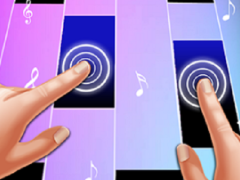
Piano Tiles is a fast-paced rhythm game that challenges players to tap on the black tiles while avoiding the white ones, all set to a variety of musical compositions ranging from classical masterpieces to contemporary hits. Each tap must be timed with the rhythm of the music, and accuracy is crucial as a single mistake means the game is over. As players progress, the speed of the tiles increases, testing reflexes and promoting a thrilling gameplay experience.
Enhance Your Experience with Various Modes
The game features several modes that cater to different skills levels and musical tastes. Whether it’s racing against the clock in Time Trial, playing through preset songs in Classic mode, or exploring lengthy compositions in Endless mode, Piano Tiles offers a dynamic platform for improving hand-eye coordination and musical perception. New songs are regularly added, keeping the game fresh and engaging for returning players. This simple yet addictive game has captured the attention of millions, offering a compact musical challenge at your fingertips.