2048











SIMILAR GAMES
























Description


2048 - Github.io Games
About 2048 - Github.io Games
Welcome to an in-depth exploration of the **iconic 2048 game** as it is often discovered and enjoyed on platforms like GitHub.io. The simplicity of its design belies a profound strategic depth that has captivated millions of players worldwide. This particular iteration, readily accessible through various GitHub.io repositories, offers a pure and unadulterated gameplay experience, focusing solely on the core mechanics that made 2048 a global phenomenon. We delve into what makes this version so compelling, its origins, and how it continues to resonate with casual and dedicated gamers alike. Understanding the allure of 2048 on GitHub.io involves appreciating its accessibility, its clear objective, and the satisfying progression of tiles that leads to the ultimate goal.
The Core Mechanics of 2048
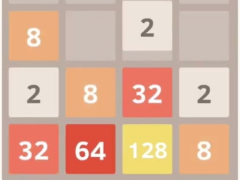
At its heart, 2048 is a **tile-based puzzle game**. The objective is straightforward: slide numbered tiles on a grid to combine them, creating tiles with progressively higher values. The ultimate goal is to create a tile with the number **2048**. The game is played on a 4x4 grid. When you initiate a new game, two tiles, each displaying either a '2' or a '4', are randomly placed on the grid. Players control the movement of all tiles simultaneously. By swiping up, down, left, or right, all existing tiles on the board move as far as they can in that direction. If two tiles with the **same number** collide during a move, they merge into a single tile with a value equal to the sum of the two original tiles. For example, two '2' tiles will combine to form a '4' tile, two '4' tiles will form an '8' tile, and so on. A new tile, either a '2' or a '4', appears in a random empty spot on the grid after each successful move. The game ends when the grid is full, and there are no possible moves left that can combine any tiles. This elegantly simple set of rules forms the foundation of a surprisingly challenging and addictive experience.
Strategic Approaches to Mastering 2048
While the game appears simple, achieving the 2048 tile, or even surpassing it, requires careful planning and a thoughtful approach. Several **proven strategies** can significantly enhance your chances of success. One of the most popular and effective is the **"corner strategy."** This involves keeping your highest value tile in one of the corners of the grid, typically the bottom right or bottom left. You then try to fill the row or column adjacent to that corner with descending tile values. The idea is to create a smooth flow of tiles, minimizing the chances of getting blocked or creating difficult-to-merge configurations. Another crucial aspect is **maintaining a consistent direction of movement** as much as possible. For instance, if you are aiming for the bottom-right corner, you would primarily use the 'down' and 'right' swipes, only using 'up' or 'left' when absolutely necessary to consolidate tiles or clear a path. This minimizes the introduction of new tiles into undesirable positions. **Patience and foresight** are paramount. It's often beneficial to think a few moves ahead, considering where new tiles might appear and how they might disrupt your carefully constructed patterns. Avoid making impulsive moves. Sometimes, a seemingly small consolidation of tiles can set you up for a much larger and more advantageous merge later on. **Prioritize merging larger tiles** whenever possible, as this clears up space and increases your potential for future merges. The ability to **anticipate and react** to the random placement of new tiles is key to long-term success in 2048.
The Corner Strategy Explained
The **corner strategy** is a cornerstone for many successful 2048 players. The principle is to **designate a specific corner** and commit to keeping your highest-value tile there. Let's assume you choose the **bottom-right corner**. Your primary goal will then be to ensure that the **bottom row and the rightmost column** are filled with tiles in a descending order from right to left or top to bottom. This means your highest tile is in the bottom right, the next highest adjacent to it, and so on. To maintain this structure, you will heavily favor the **'down' and 'right' swipe directions**. The 'up' swipe is generally to be avoided unless it is absolutely essential to clear a necessary merge in the bottom row or right column, or to prevent a catastrophic grid lock. Similarly, the 'left' swipe should be used with extreme caution, as it can potentially dislodge your highest tile from its corner sanctuary. When a new tile appears, it will often do so in an empty space. The strategy aims to make these new tiles appear in less critical areas or in positions where they can be easily merged into the existing structure without disrupting your corner anchor. Mastering this requires consistent practice and an acute awareness of the grid’s state after each move. It provides a solid framework that reduces the randomness of the game to a more manageable challenge.
Maintaining Grid Flow and Avoiding Lockdowns
A critical element in 2048, especially when aiming for higher scores, is maintaining **optimal grid flow** and actively **preventing tile lockdowns**. A **tile lockdown** occurs when your highest value tiles become isolated and surrounded by smaller tiles, making it impossible to merge them without significant disruption. To avoid this, focus on **consolidating similar tiles** whenever possible. Don't be afraid to make small merges that clear space and bring similar numbers closer together. **Keep your grid as open as possible**. A cluttered grid offers fewer opportunities for beneficial merges and increases the likelihood of new tiles appearing in inconvenient spots. Observe the patterns of tile generation. While random, there are trends. If you consistently find yourself getting '2's in awkward positions, you might need to adjust your movement strategy. **Prioritize moves that create opportunities for larger merges** over those that merely clear a single tile. The more effectively you can combine tiles, the more space you free up, and the less likely you are to experience a frustrating gridlock. Think of the grid as a dynamic system. Your goal is to facilitate movement and combination, not to create static, unmovable arrangements.
The Appeal of 2048 on GitHub.io
The prevalence of 2048 on GitHub.io speaks volumes about its enduring appeal. GitHub.io serves as a fantastic platform for developers to **showcase simple, yet engaging web-based games**. These versions of 2048 are often **open-source**, meaning players can even inspect the code behind the game, which adds another layer of fascination for some. The accessibility is unparalleled; players can usually jump into a game with just a few clicks, without needing to download any software or create an account. This **low barrier to entry** is a significant factor in its widespread popularity. Furthermore, many GitHub.io implementations of 2048 are **minimalist**, devoid of intrusive advertisements or complex interfaces, offering a pure and focused gaming experience. This allows players to concentrate entirely on the puzzle itself. The fact that these games are often hosted on a developer's personal or project page also contributes to a sense of direct connection to the game's creation, fostering a community around shared enjoyment and simple digital play. The ability to access this classic puzzle on a reliable and developer-friendly platform like GitHub.io ensures its continued presence in the digital entertainment landscape.
Variations and Enhancements Found on GitHub.io
While the core 2048 experience is immensely satisfying, many developers on GitHub.io have taken the initiative to introduce **variations and enhancements** that add new dimensions to the gameplay. These can range from simple aesthetic changes to fundamental alterations of the game's rules. Some popular modifications include:
- Different Grid Sizes: Beyond the standard 4x4 grid, you can often find versions with larger grids (e.g., 5x5, 6x6) or even smaller ones (e.g., 3x3), each offering a unique challenge.
- Alternative Tile Values: Instead of doubling values (2, 4, 8, 16...), some variations might use different progression systems or incorporate special tiles with unique effects.
- New Game Modes: This could include time-based challenges, score attack modes, or modes where the objective is to reach a specific tile value rather than 2048 itself.
- Themed Visuals: Developers often customize the look and feel of the game with different color schemes, tile designs, or background images to make it more visually appealing.
- Persistence and Leaderboards: Some implementations might offer features like saving game progress or integrating basic leaderboards to track high scores, adding a competitive element.
Exploring Different Grid Configurations
The **standard 4x4 grid** is the benchmark, but exploring games hosted on GitHub.io reveals a fascinating array of **alternative grid configurations**. These are not mere cosmetic changes; they fundamentally alter the strategic landscape. A **larger grid**, such as a 5x5 or 6x6, demands significantly more planning and foresight. The increased number of cells means more space to maneuver, but also a greater potential for tiles to become isolated and harder to manage. Merging your way to higher numbers becomes a much longer and more intricate process. Conversely, a **smaller grid**, like a 3x3, intensifies the pressure. Every move becomes more critical, and the likelihood of gridlock is substantially higher. Players must be incredibly efficient with their merges and constantly mindful of preventing any empty spaces from becoming permanently occupied by unmovable tiles. These different grid sizes offer distinct challenges, appealing to players who enjoy varying levels of complexity and pressure. They highlight the adaptability of the core 2048 mechanic and its capacity to provide fresh strategic puzzles through simple structural alterations. The availability of these options on platforms like GitHub.io allows players to tailor their experience to their preferred level of difficulty and strategic engagement.
Customizable Aesthetics and User Experience
Beyond the raw gameplay, many 2048 implementations found on GitHub.io excel in offering **customizable aesthetics and an enhanced user experience**. Developers understand that a pleasing visual presentation can significantly contribute to player enjoyment. This often translates into a variety of **color themes** that players can select from, catering to different visual preferences. Some themes might be bright and vibrant, while others opt for a more subdued or even minimalist palette. Beyond colors, the actual appearance of the tiles themselves can be altered. Instead of the default numbers, some versions feature **unique tile designs**, perhaps inspired by different materials, abstract patterns, or even popular culture references. This visual flair can make the game feel more personal and engaging. Furthermore, the user interface itself is often streamlined. Many GitHub.io versions prioritize **intuitive controls and clear feedback**. Animations for tile movement and merging are typically smooth and responsive, providing satisfying visual cues. The absence of complex menus or unnecessary distractions ensures that players can focus on the puzzle. This attention to visual polish and user-friendliness is a hallmark of well-executed web games hosted on these platforms, making the act of playing 2048 on GitHub.io a consistently enjoyable affair.
Achieving the 2048 Tile and Beyond
The ultimate triumph in 2048 is, of course, reaching the **2048 tile**. This moment signifies a successful application of strategy and a degree of luck in tile placement. However, for many dedicated players, the game does not end there. The true challenge lies in seeing how high you can go. Once the 2048 tile is achieved, the grid may still have empty spaces, allowing for continued play. Players often aim for the **4096 tile**, then **8192**, and so on. Each subsequent tile represents a significantly greater strategic hurdle. To achieve these higher numbers, players must meticulously refine their strategies, paying even closer attention to maintaining a perfect grid flow and consistently consolidating tiles. The probability of creating these extremely high-value tiles is incredibly low without near-perfect play. This continuous pursuit of higher scores and more complex tile merges is what gives 2048 its **remarkable replayability**. The satisfaction derived from seeing those increasingly larger numbers appear on the board is a powerful motivator, encouraging players to return to the game time and again, always seeking to improve their personal best and push the boundaries of what is possible on the 4x4 grid.
The Thrill of Higher Score Pursuits
The journey to the 2048 tile is merely the beginning for many enthusiasts. The real **thrill of higher score pursuits** in 2048 lies in the escalating challenge and the mastery required to achieve even more formidable numbers. Reaching 4096, 8192, or even 16384 requires a level of strategic precision and foresight that far surpasses basic gameplay. At these advanced stages, every single move carries immense weight. The introduction of a single '2' or '4' tile in an unfavorable position can cascade into a game-ending scenario. Players must develop an almost intuitive understanding of the game's probabilities and mechanics. They learn to manipulate the grid to their advantage, creating pockets for new tiles to appear safely, and ensuring that their highest-value tiles are always positioned for future merges. This iterative process of strategy refinement, practice, and learning from mistakes is what makes the pursuit of higher scores so compelling. It's a mental marathon where patience, adaptability, and a keen eye for patterns are the keys to success. The feeling of accomplishment when you finally combine tiles to create a new, higher benchmark is deeply rewarding, driving players to constantly test their limits and aim for new personal bests.
Community and Competitive Spirit
While many 2048 games on GitHub.io may not feature elaborate online multiplayer or complex social integration, a subtle yet pervasive **community and competitive spirit** exists. This manifests in several ways. Players often share their high scores and strategies on forums, social media, or within the comment sections of game repositories. The desire to **outperform friends or anonymous players** drives many to refine their techniques and seek out the most efficient methods for achieving higher numbers. Leaderboards, even if simple, can foster a sense of friendly rivalry. Furthermore, the open-source nature of many GitHub.io games allows for a collaborative environment where players can contribute suggestions, report bugs, or even fork the project to create their own enhanced versions. This shared passion for the game, even if expressed individually through solitary play, builds a connection among players. The collective experience of grappling with the game's challenges, sharing triumphs, and learning from each other's insights creates a vibrant, albeit decentralized, community around this deceptively simple puzzle.
2048 invites players into a subtly complex puzzle where mathematics meets strategic maneuvering in a confined space. At its core, the game’s premise is seemingly straightforward: swipe to move and merge tiles of equal values, exponentially doubling them towards the target of a 2048 tile. Yet, beneath its minimalist interface lies a rigorous test of planning and foresight. Each swipe fills the 4×4 grid slightly, introducing new “2” or “4” tiles.
Strategic Harmony in Numbers
The essence of 2048’s challenge blooms in managing the numeric landscape. Players must cultivate a tactical harmony where each move is part of a broader strategy. The goal is to avoid isolating high-value tiles which could block potential merges. Advanced players often adopt a corner strategy, anchoring their highest value tile in a fixed position to build around. This methodical approach turns each session into a cerebral dance, where every slide, every merge, and every new tile plays into a grander scheme of spatial economy and numeric potential.
2048’s allure springs from its blend of simplicity and cognitive engagement. It doesn’t just challenge players to hit a numeric target but encourages the development of a nuanced strategy to navigate its tight, evolving board. Each game is a fresh mental workout, a puzzle that’s as addictive as it is rewarding, drawing players back to surpass their personal bests and redefine their strategic limits. This game transforms a simple grid and a series of numbers into an arena of infinite possibilities and mind-bending puzzles, proving that true challenge often comes in the most unassuming forms.