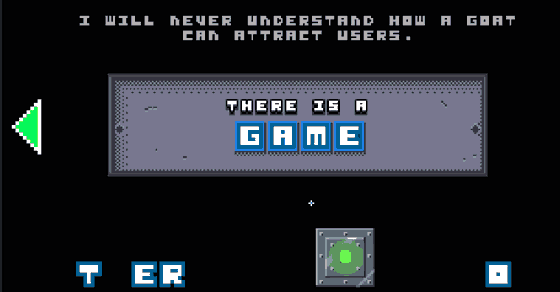
THERE IS NO GAME










SIMILAR GAMES























Description


There is no game - Github.io Games
About There is no game - Github.io Games
We explore the unique proposition presented by the GitHub .io repository that describes itself as a collection of games hosted under the domain gamespluto.gitlab.io. The title suggests an absence of a traditional game experience, yet the underlying structure invites users to discover interactive experiences that exist solely within a static hosting environment. Our analysis delves into the architecture, user interaction patterns, and the narrative that surrounds this unconventional project.
Exploring the Experience
We examine how the platform leverages GitHub Pages and GitLab Pages to deliver lightweight gameplay without the need for downloads or installations. The absence of a conventional interface is compensated by a series of embedded HTML5 canvases, JavaScript snippets, and CSS stylings that transform the browser into a gaming console. Each entry functions as an isolated sandbox, allowing developers to experiment with mechanics while users engage directly through the web.
Core Elements
We identify several core elements that define the experience:
- Minimalist Presentation – Clean layouts focus attention on gameplay.
- Instant Accessibility – No registration or authentication required.
- Open‑Source Collaboration – Contributions are welcomed through standard Git workflows.
- Cross‑Browser Compatibility – Designed to run on modern browsers without plugins.
Technical Foundations
We detail the technical stack that powers these games:
- HTML5 for structure and semantics.
- CSS3 for responsive design and visual styling.
- JavaScript (ES6+) for interactive logic and canvas rendering.
- Git version control for collaborative development.
Each component is optimized to reduce load times and maintain smooth frame rates, even on modest hardware.
Performance Considerations
We emphasize the importance of efficient asset management:
- Compressed image formats such as WebP.
- Lazy loading of non‑essential scripts.
- Minification of CSS and JavaScript files.
- Use of requestAnimationFrame for smoother animation loops.
User Interaction Model
We describe how players engage with the games:
- Keyboard Controls – Mapping of keycodes to in‑game actions.
- Mouse Input – Click and drag for navigation or manipulation.
- Touch Support – Adaptive touch gestures for mobile browsers.
- Progressive Enhancement – Core gameplay remains functional even when advanced features are unavailable.
Game Genres Represented
We catalog the variety of genres that populate the repository:
- Puzzle – Logic‑based challenges that stimulate spatial reasoning.
- Platformer – Side‑scrolling adventures requiring precise timing.
- Arcade – Reflex‑driven experiences with high score tracking.
- Simulation – Simple physics‑based interactions that mimic real‑world phenomena.
Community Involvement
We highlight the role of the community in shaping the repository:
- Contributors submit pull requests to add new games or improve existing ones.
- Code reviews ensure adherence to best practices and licensing standards.
- Issue trackers facilitate bug reporting and feature requests.
- Documentation files guide newcomers through the development workflow.
Contribution Workflow
We outline the typical contribution cycle:
- Fork the repository and clone the local copy.
- Create a dedicated branch for each new game or enhancement.
- Implement changes while following the established coding conventions.
- Run the local test suite to verify functionality.
- Open a pull request targeting the main branch.
- Address reviewer feedback and merge upon approval.
Future Roadmap
We anticipate several upcoming initiatives aimed at expanding the platform’s capabilities:
- Integration of WebAssembly modules for computationally intensive tasks.
- Introduction of a unified authentication system for user‑generated content.
- Implementation of a recommendation engine based on player preferences.
- Expansion of multiplayer functionality through WebRTC connections.
These developments underscore a commitment to evolving the project while preserving its foundational ethos of accessibility and openness.
Play There is no game for free on Github.io Games,
Embark on a thrilling gaming journey with GitHub.io Games, the ultimate destination for thousands of elite unblocked games across every genre imaginable. From pulse-racing action epics and mind-bending puzzles to tranquil casual escapes, our meticulously curated library ensures endless fun for every player. Relish ad-free, unblocked gaming with smooth, continuous play, perfectly suited for school, work, or relaxation. Our browser-based games are entirely free, instantly accessible, and demand no downloads. Plunge into the finest free online games experience and uncover a universe of unblocked gaming built for maximum enjoyment!